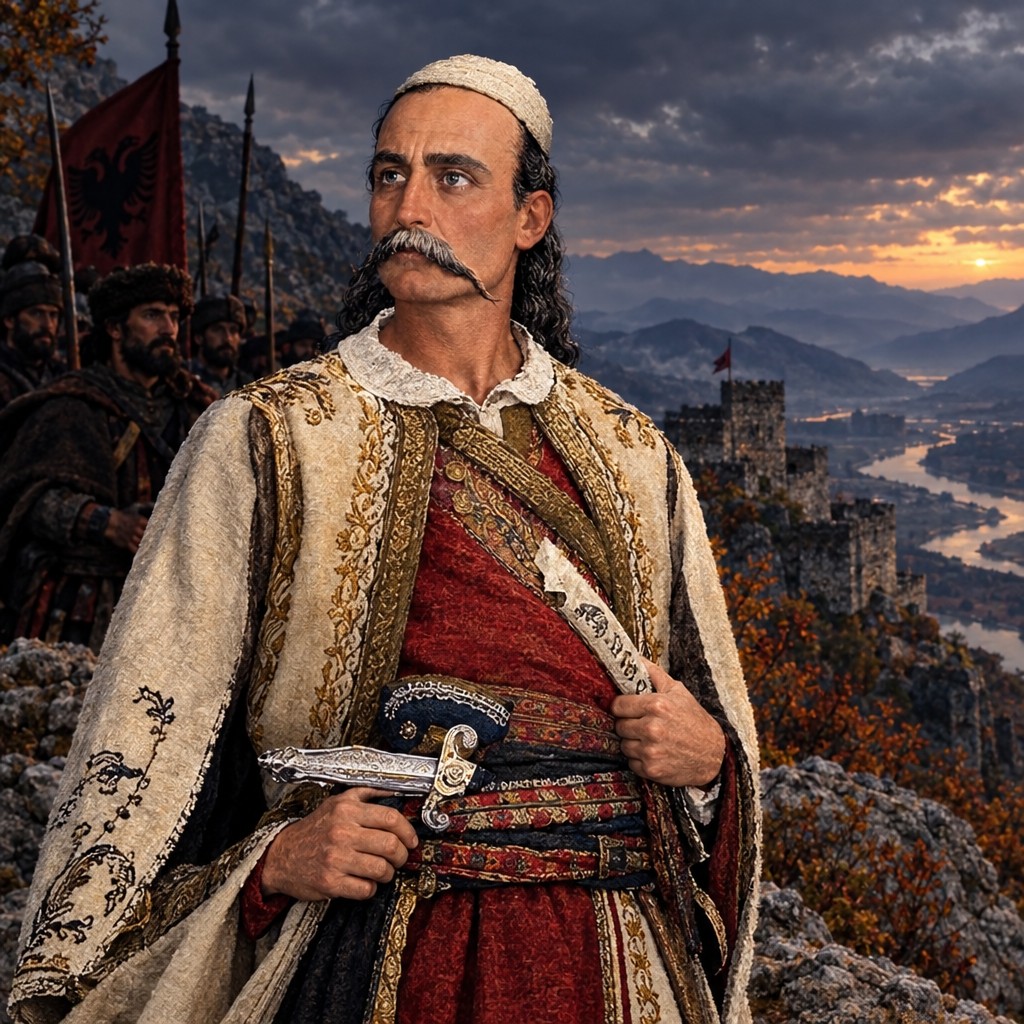
Lekë III Dukagjini
died after 1481
Lekë Dukagjini was a 15th-century Albanian nobleman and a contemporary of Skanderbeg. He belonged to the younger branch of the Dukagjini family and ruled a feudal domain in northern Albania. His name is attached to the Kanun, a code of customary law.
Principality of Dukagjini, northern Albania
- Died
- After 1481No later records are known
- Role
- Nobleman and ruler
- Title
- Prince of DukagjiniRuled 1446 until 1479
- Affiliation
- Dukagjini familyYounger branch
- Region
- Northern AlbaniaLezhë, Mirditë and Pukë hinterlands
- Father
- Pal Dukagjini
- Notable work
- KanunCode of Lekë Dukagjini
Why He Matters
Name behind the Kanun
The customary law of the Albanian highlands bears his name, though the text evolved over centuries and was only named after him.
Resistance leader after Skanderbeg
After Skanderbeg died in 1468, he emerged as a principal leader of the Albanian resistance against the Ottoman Empire.
Complex noble figure
He fought Venice, allied with the Ottomans, then reconciled with Venice and Skanderbeg.
Key Moments
- 1446
Becomes ruler
He began ruling the Principality of Dukagjini after the death of his father Pal.
- 1456
Captures Dagnum
He seized the Venetian fortress of Dagnum, though Venice retook it in June 1457.
- 1459
Peace with Venice
A treaty signed in Shkodër on 19 February ended hostilities with Venice.
- 1468
Skanderbeg's death
According to Barleti, he was first to announce Skanderbeg's death to the Albanian people.
- 1477
Victory at Krujë
He played a significant role in an Albanian victory under the walls of Krujë.
- 1481
Failed return
He and his brother returned from Italy after Mehmed II's death, but their attempt to spark an uprising failed.
Stories featuring Lekë III Dukagjini
All stories
Associated People
View all- Gjergj Kastrioti SkanderbegContemporary and rival
- Pal DukagjiniFather
- Nicholas Pal DukagjiniBrother
- Draga DukagjiniFamily rival
- Lekë ZahariaRival lord
Associated Places
- DagnumFortress
- ShkodërCity
- SatiFortress
- KrujëCity
- LezhëCity